Whether you’re planning your first visit, considering a move, or simply curious about what makes Gibraltar unique, welcome to your practical guide to Gibraltar.
Here, you’ll find answers to some of the most frequently asked questions about visiting and living in Gibraltar.
Which languages are spoken in Gibraltar?
English is the official language, although Spanish is also widely spoken, including by many cross-frontier workers. Locals commonly speak Llanito (also written Yanito), an informal form of speech that mixes English and Andalusian Spanish and reflects Gibraltar’s multicultural history. Its vocabulary can also show influences from other languages historically spoken by communities in Gibraltar.
What time zone is Gibraltar in?
Gibraltar follows Central European Time (CET), the same time zone as mainland Spain. It also observes Daylight Saving Time, switching to Central European Summer Time (CEST) during the summer.
What currency is used in Gibraltar?
Gibraltar uses the Gibraltar Pound (GIP), which is maintained at parity with the British Pound (GBP) at a 1:1 rate. British Pounds are widely accepted throughout Gibraltar.
Euros are also accepted by many shops, restaurants and tourist businesses, although the exchange rate offered may not be as favourable as paying in pounds. Change is often given in Gibraltar or British Pounds.
Gibraltar Pound notes and coins are not normally accepted outside Gibraltar, so it is advisable to spend or exchange them before leaving.
Is Gibraltar a good place for shopping?
Shopping remains popular in Gibraltar. The territory does not levy VAT, although a new Transaction Tax on goods was introduced in 2026 as part of the new customs arrangements with the European Union.
Most shops are concentrated along Main Street and the surrounding streets. You’ll find traditional stores, independent boutiques and familiar British and international brands such as Marks & Spencer, Morrisons, Holland & Barrett and Next.
Don’t miss the Gibraltar Public Market next to Casemates Square. Inaugurated in 1929, it offers food, fresh produce and local products.
Items such as perfumes, cosmetics, tobacco, spirits, jewellery and electronics have traditionally attracted shoppers, although prices should always be compared rather than assumed to be cheaper.
If you intend to take purchases out of Gibraltar, check the current customs and traveller allowance rules. Under the arrangements introduced in 2026, personal allowances initially include a value threshold of €300 when travelling by land and €430 when travelling by air or sea, alongside separate quantitative limits for products such as tobacco, alcohol and fuel.
Where can I shop for groceries and essentials?
There’s a large Morrisons on Westside Road, along with Eroski and a number of local supermarkets and convenience stores.
Many people who live or work in Gibraltar also shop in neighbouring Spain, where larger supermarkets such as Carrefour and Mercadona can be found in the surrounding Campo de Gibraltar area.
What are the opening times for shops?
Opening hours vary between businesses. Many shops in and around Main Street open from Monday to Saturday, while Sunday and public-holiday opening is generally more limited.
Some businesses extend their hours or open on Sundays when cruise ships or major events bring additional visitors to Gibraltar. It is therefore best to check the opening hours of a particular shop before making a special journey.
Do I need a travel adapter for my devices?
Yes, if your devices don’t use Type G plugs with three rectangular pins. This is the same plug type used in the UK.
The electricity supply is approximately 230 V at 50 Hz. Travellers from countries using a different plug type will normally need an adapter, while some electrical devices may also require a voltage converter.
When is the best time to visit Gibraltar?
It depends on what you’re looking for. For warm, sunny weather without the strongest summer heat, late spring and early autumn can be excellent times to visit.
These seasons are particularly suitable for hiking, sightseeing and exploring Gibraltar’s outdoor attractions. Winter is generally quieter and mild compared with many parts of Europe, although rainfall is more frequent.
Top tip: To anticipate particularly busy days, check the Gibraltar cruise ship schedule. The arrival of large cruise ships can noticeably increase visitor numbers around Main Street, Casemates Square and the main attractions.
Do I need a car to get around?
Not necessarily. Gibraltar is compact and highly walkable, while buses and taxis provide connections to most areas of the territory.
Access by private vehicles to parts of the Upper Rock Nature Reserve is restricted, and parking can be difficult in busy central areas. Many visitors therefore leave their vehicle in La Línea de la Concepción in Spain and enter Gibraltar on foot.
Since 15 July 2026, routine immigration and customs checks at the Gibraltar–Spain land frontier have been removed, making pedestrian movement across the border considerably more fluid.
Although Gibraltar is a British Overseas Territory, driving is on the right-hand side of the road, unlike in the UK.
Are there accessible facilities in Gibraltar?
Yes. A number of attractions and public areas provide facilities for visitors with reduced mobility, although accessibility varies because of Gibraltar’s steep terrain and historic sites.
For information on individual attractions, visit the official Visit Gibraltar accessible sites guide.
Can I bring my pet to Gibraltar?
Yes, but specific animal-health requirements apply.
For dogs, cats and ferrets, animals must normally be identifiable by microchip and have a valid rabies vaccination given after microchipping. Following a primary rabies vaccination, at least 21 days must pass before the animal enters Gibraltar.
Animals must also have the appropriate pet passport or veterinary health certificate. Pets travelling from the UK can use the health documentation required under the post-Brexit arrangements.
Additional requirements, including rabies antibody testing, can apply to animals arriving from some countries. For current requirements, check the Gibraltar Environmental Agency before travelling.
Is healthcare available in Gibraltar?
Yes. Public healthcare is provided by the Gibraltar Health Authority (GHA). The territory’s main hospital is St Bernard’s Hospital at Europort.
British nationals who normally live in the UK can receive emergency treatment in Gibraltar by presenting a British passport. UK visitors should also carry a valid Global Health Insurance Card (GHIC) or qualifying European Health Insurance Card (EHIC).
This is particularly important because some emergency cases may require treatment or transfer to Spain. A GHIC or EHIC is not a substitute for travel insurance, which should also cover circumstances such as private treatment and medical repatriation.
Healthcare entitlements differ according to nationality and residence status, so visitors from countries other than the UK should check their own insurance arrangements before travelling.
What is the flag of Gibraltar like?
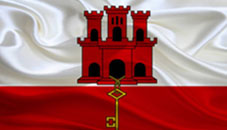
The flag of Gibraltar has two horizontal bands: white above red. In the centre is a red three-towered castle, with a gold key hanging beneath it.
The design derives from Gibraltar’s coat of arms and reflects the territory’s long history as a strategically important fortress at the entrance to the Mediterranean.
What is National Day?
Gibraltar National Day is celebrated annually on 10 September. It commemorates the 1967 sovereignty referendum, when an overwhelming majority of Gibraltarians voted to retain their links with Britain rather than pass under Spanish sovereignty.
Today, National Day is a major celebration of Gibraltarian identity and self-determination. Gibraltar is decorated in red and white, while the programme normally includes political speeches, music, family activities and public celebrations around locations such as Casemates Square.
The precise programme changes each year. In 2026, celebrations included concerts and entertainment followed by a fireworks and drone display over the Bay of Gibraltar.
What is schooling like in Gibraltar?
Gibraltar’s education system is closely based on the English education system. Schools teach a curriculum broadly aligned with England, and students normally work towards qualifications including GCSEs and A-Levels.
Which religions can be found in Gibraltar?
Gibraltar has a long history of religious and cultural diversity. Christianity, particularly Roman Catholicism, is the largest religion, alongside established Jewish, Muslim, Hindu and other religious communities.
This diversity reflects Gibraltar’s history as a Mediterranean trading centre and the different communities that have settled on the Rock over the centuries.
Useful telephone numbers:
- The country calling code for Gibraltar is +350
- Emergency – Police, Ambulance and Fire: 999
- Local directory enquiries: 11811
- International directory enquiries: 11888
- Gibraltar International Airport enquiries: +350 200 12345
Last Updated on September 8, 2026 by Sebastien Frisco